Register
Forgot Password?
Score
-
-
-
  /100
Certificate
SEO Certificate

3.6 Tune up the landing page

Sorry, you are not logged in. Please login to get full access to this page or register if you're not registered yet.

First, let's see what we have:

  • a landing page waiting to be optimized
  • a list of keywords for your landing page
  • software that lets you make an ideal landing page

Quite enough to make your site a success. And, one by one, you'll make things to add flavor to your page.

Give your page a good title

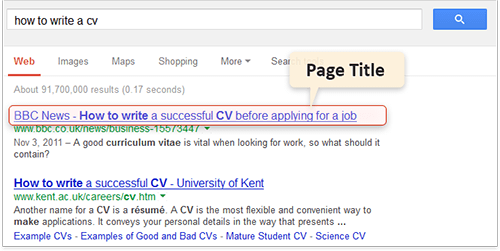
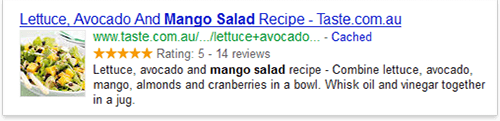
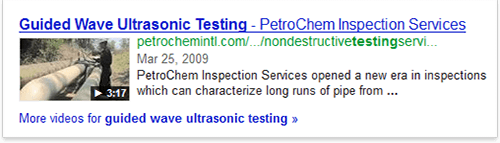
Page titles are displayed by search engines in their results pages. So this title is quite often the most prominent thing for your users, and for Search Engines. And sure, as it's the first thing they learn about your page, its importance is huge. That's why we start from the title.

Page's title in Google results

Oh, my wife would tell you the same thing, for sure!
The first thing to learn matters a lot.

Think of this: when we met at that unicorn party, what could my friend tell about her?

Here's just two of the options:
"Hi Dan, this is Linda, my sister's roommate. She's so fun to get drunk with!"
or
"Hi Dan, this is Linda, my sister's roommate. She loves Depeche Mode like you do."

I guess it's obvious, what'd make me think better of her.

Sure, the number of options is unlimited. And, telling you the truth, what my friend in fact said about my future wife was: "Dan, meet Linda, Kelly's roommate". Then he whispered "Don't miss this butt!".

I wish all page titles could work as great on crawlers and users, as this phrase worked on me ;)

Now, make a TITLE for your landing page.

Note: page title should be unique for your website. It's better if you don't have two pages that bear the same title.
Keyword list

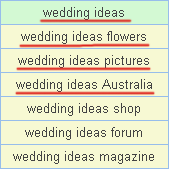
Now, look at your list of keywords.

For the title, take your first major (green) keyword, then a couple supplementary (yellow) ones, depending on how long they are. Plus, you need something descriptive, telling about the purchase, or discount, or delivery, or anything else concerning your service that will let the title stand out.

And remember:

Always try to start your page title from keywords, and put other words in the end.

You can separate keywords by comma (,), hyphen (-), or pipe sign (|). Most webmasters use pipe. Well, but it doesn't look natural. The title just doesn't read like a real phrase.

Use commas or hyphens — this makes no difference to Search Engines, but looks more human to users.

For instance, a great title for your weddings-related website would be:
Wedding ideas, wedding dresses, accessories, flowers — free delivery in Sydney

As a title tag, it looks like this:
<title>Wedding ideas, wedding dresses, accessories, flowers — free delivery in Sydney</title>

Here's a real title from the website http://www.weddingchannel.com:

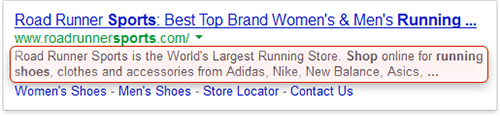
Example of a page title

Here's the title tag:
<title>Wedding Planning — Wedding Dresses — Wedding Gifts — Wedding Website</title>

And just some more examples of nice titles:

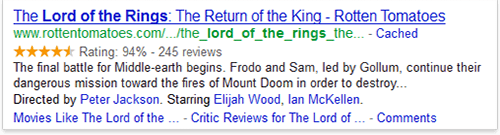
Example of a well-optimized page title

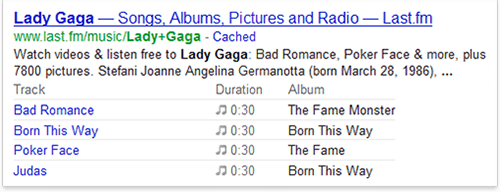
Example of a well-optimized page title

Example of a well-optimized page title

Now WebSite Auditor helps you make a perfect title. Look at the part of it's Onpage Optimization Report called Page Title. Check the recommended number of words and keyword density there, and make a nice title that fits. Make use of your keywords, like I said before. And, remember it should look attractive to a human.

Don't wait to transfer the page with the new title to your server. Just within days, you'll see what effect it can take!

DO IT NOW! Change the title of your web page and make sure it appears in the Internet.

30 comments

Add comment Hide commentsShow comments

Please log in or register to leave a comment.

2009-06-02 12:07:06: Dan Richmond

@ Krisjanis Berzins

Well I don't think it's a good idea.

1) If you want to use your brand name in the title for optimization then it's quite enough to use it in just a couple of pages. One page in search engine results for your brand name is absolutely enough to bring you visitors searcheing for you by the brand name.

Page title is too important for SEO to stuff it with the words that won't bring you much traffic. And the brand name hardly will.

2) If you want to use your brand name in the title to constantly remind the user where they are - well that also seems like a short-sighted approach. I'm sure there's enough identity staff on your site so that your user doesn't forget which company's website he/she is viewing.

Answer
2009-06-09 13:17:22: Investigator Jobs

I have a question that I cant seem to wrap my head around. Im sure the answer is very simple but, I have to ask anyways.

When using WebAudit, are we basing our revisions on 1 KEYWORD per page only - (our best keyword out of the 5+ we have for that page?) - and than optimizing everything around that 1 keyword and thats it (not running the other keywords at all?)

or

Should we be entering all of our 5+ keywords for that page at the same time in WebAudit and/or going back and entering them all each 1 by 1? (and optimizing via WebAudit for all 5keywrds)


From what I can tell, this method is geared towards using only the 1 or 2 main keywords for your page and not even running the other 3+keywrds?
I cant see it possible to adhere to the wordcount and title requirements for all of the pages 5+ keywords at the same time.

Am I close?

Is it safe to say that if I want to optimize a page for a keyword, that it has to be the main keyword for the page and not the 3r'd or 4'th down on the list of keywords for that page?
In other words, its mainly ONLY 1 or 2 keywords per page to be run on WebAudit (the rest are just complimentary backup?) and if I want to be FULLY optimized for a keyword in the SE's, that keyword will need to be the main keyword on its own page.


Answer
2009-06-10 05:46:32: Dan Richmond

@ Andrew Collins

Normally you would have one main keyword or phrase for a page, plus a few complimentary ones. So it's most important for you to optimize for this most important keyphrase in the first turn.

So in WebSite Auditor, you make analysis for your #1 keyphrase first, and tune-up your page for it.

After your page is ideally optimized for this most important keyphrase, go over the rest of your keywords and optimize for them as well, but make sure that this does not change the distribution of your main keyphrase.

Answer
2009-06-10 15:55:55: Investigator Jobs

thanks for the quick reply.

The trouble Im having is that if I have 3+ very good keywords that are very much the same... Wouldnt I want those kwrd's grouped together on the same page?
But, if I do that... I cant FULLY optimize my page for each keyword which is "what I want to do". Than at the same time if I created 3 seperate pages, than the content would seem redundant. to seperate or not?

I have pages that have 4-10 realy good keywords on them however, Im thinking that even though they are "related to the page" and seem to belong together.... I should be seperating them so that I can fully optimize each keyword for the SE traffic.

Is it correct to say that you WONT get Google rankings and/or traffic from 3rd and 4th level keywords on that page because the page is primarily optimized for the first and maybe 2nd keyword.

Im still trying to wrap my head around this?

?

Answer
2009-06-15 06:40:30: Dan Richmond

Still some keywords are getting more searches than the other and/or are more closely related to your business offer. It's obvious that if you want to optimize, say, your webpage's title, you cannot give the first position to all your keywords. You need to choose one which is the most important, optimize for it in the first turn. Then use the ones which are also profitable, but be ready that you will not be able to equally optimize for them.

But you can gain higher rankings for these words due to link builing.

Answer
2009-08-09 16:56:34: Lowell Nickens

I've been tuning up my landing pages and have been amazed that the top 10 competitors of mine in many categories have Optimization percentages as much as 60 percentage points lower than mine and are the top ranked competitor in Yahoo. When I look at the cached page report for their landing page it's littered from top to bottom with the search phrases that they are optimizing for. Doing that makes it impossible to get a good optimization score. Is this a situation where you can either optimize your pages to get better natural rankings or forget about optimizing your pages and just back link them to death or whatever other strategy might work because it sure doesn't look like these competitors even know what optimizing a landing page is all about and they're in the top 10. I'd love to get some response on this.

Thanks, Lowell

Answer
2009-08-10 06:05:00: Dan Richmond

@Lowell Nickens

Yahoo! and Google differ a lot in the way they rank a webpage. While Google will negatively treat webpages overstuffed with keywords, Yahoo! will most likely rank these pages high - that's what you see in the case with top 10 sites in Yahoo!. Therefore you always have to choose which Search Engine is most important to you.

Answer
2009-12-11 04:56:21: Ken Taylor

This has been a very helpful lesson. I played around with my title using various formats, (,) and (-) in addition to adding some enticing copy. I found that too much really doesn’t attract my eye. Since my KW phrases are 3 to 4 words I found three KW phrases to work out fine with the eyes. And my vote goes for (-).

Thanks so much for this lesson Dan. Using RW I was able to change things in seconds. Upload. View. And change again. You were right. This SEO is getting to be more fun and interesting with each lesson.

Answer
2010-01-03 07:28:06: Paul Watchorn

Hi Dan
I have just started to read this page, I keep meaning to ask this question, so I will do it right now.
Do the search engines worry about upper & lower case and things like punctuation, (brackets) and so forth?
The example at the top of the page is a good example ‘curriculum vitae’ is in brackets, will the search engine ‘read anything’ into that. Also a lot of it is in capitals, is that something to think about?

Answer
2010-01-03 07:42:09: Paul Watchorn

Hi Dan,
It was another great lesson. I understand how Lowell Nickens
feels though.
So is there a way to choose which search engine to optimise for?
I have been thinking Google, but that is only because I use Google, this is a whole new thing to think about, who do you optimise for, and why

Thanks

Answer
2010-01-05 10:12:20: Dan Richmond

@Paul Watchorn

Do the search engines worry about upper & lower case and things like punctuation, (brackets) and so forth?

Not really

So is there a way to choose which search engine to optimise for?
I have been thinking Google, but that is only because I use Google, this is a whole new thing to think about, who do you optimise for, and why


Google has the greatest share of traffic (unless we're in Japan) so that would be the #1 choice. You might want to create another webpage to get it optimized in Yahoo! (since for Yahoo! it will require more keyword stuffing that would look spammy to Google.)

Answer
2010-01-06 12:00:33: Paul Watchorn

Hi Dan, Thanks for that, do you think that optimising for Yahoo,i.e stuffing with key words, would make the Google bots get upset, and downgrade the site at all?

Answer
2010-01-13 11:56:58: Dan Richmond

@Paul Watchorn

This is not something I think - it's rather what I've seen. That's why I'm saying, have your homepage optimized for your #1 targeted search engine (ex. Google), then create another page for a less important SE that's using other principles to rank you (ex. Yahoo!).

Answer
2010-01-21 13:12:49: Ben Lovegrove

I'm a bit confused here Dan. You've suggested that in our example you would use 'wedding ideas' at the start of the title for the page in question. I've followed that example in a new page and run the audit using Website Auditor.

The report says that:

"the keyword "xxxx yyyy zzzz" stands to close to the beginning of the title. Please move your keyword closer to the end."

This is in order to match the prominence of 63% of my competitors for that phrase.

Doing so may well match the way they've done it but wouldn't it be better to do as you say and keep it at the beginning of the title?


Answer
2010-01-22 08:55:40: Dan Richmond

@Ben Lovegrove

WebSite Auditor gives pretty relevant advice. If your competitors are poorly optimized, it may give you recommendations for a lower prominence or density. Still for the title, it's always better to have your keyword at the beginning. So you're right here, Ben.

Answer
2010-02-10 09:08:02: Affiliate Network

Hi Dan, i was also confused about putting the main keyword in the beginning of the title, because Website auditor recommended me to put it almost at the end. But your answer to Ben makes a little bit more clear. But.. Why then "poorly optimized" competitors are in Google's TOP 10 position for very competitive keywords (for example top10 in 200 millions results)?

Answer
2010-02-16 10:01:54: Dan Richmond

@Affiliate Network

Why then "poorly optimized" competitors are in Google's TOP 10 position for very competitive keywords (for example top10 in 200 millions results)?

Don't forget that SEO is not only on-page optimization but also link building. Most probably they've got lots of links with the keyword in anchor.

One more thing: before simply following advice and moving your keyword closer to the end, pay attention to your competitors' titles. Check which keywords they have as the beginning. Probably those keywords are more profitable than the ones you've chosen (and that's why they are staing at the very front).


Answer
2010-03-05 09:49:41: Tom Greenwood

You've said:
"Always try to start your page title from keywords, and put other words in the end."

Yet when I run the report in WebsiteAuditor it tells me that the 'keyword prominence' in my titles is too high and that I should move my key words towards the end. Seems like a contradiction. Am I missing something?

Answer
2010-03-11 05:17:17: Dan Richmond

Tom, please look at my comment right above yours:
-------------------------------------------------------------
One more thing: before simply following advice and moving your keyword closer to the end, pay attention to your competitors' titles. Check which keywords they have as the beginning. Probably those keywords are more profitable than the ones you've chosen (and that's why they are staing at the very front).
-------------------------------------------------------------

Answer
2010-03-11 12:19:48: Tom Greenwood

Yes, I understand. However, the cases I'm referring to involve competitors that clearly don't have better keywords at the beginning of their titles.

I had a good reply from support yesterday on this issue, where they clarified that the softwares advice is often wrong (and that your advice in the above article is correct!), and in fact the software's advice can be opposite of what you should really do because it assumes that your competitors have excellent onpage SEO for your chosen keywords and advises you to be more like them, which is not actually always a good idea.

Once you know this, you can make more informed decisions and work around it, but its very misleading if you're new to the software.

Answer
2010-03-12 11:10:00: Dan Richmond

Sure it's much better if you have some background knowledge that allows you to judge whether the advice is good to apply.
BTW WebSite Auditor is being modernized now and I'm advising on the changes as well. The problem you've spotted will be addressed in the upcoming new version.

Answer
2010-04-08 17:29:51: Pavel Velinov

Hi Dan, I have just finished optimizing my front page for resellyourwedding.com and I have added a bunch of anchored text (by advice from WebSite Auditor) but in order the page does not look too over crowded with links, I've put {text-decoration:none} in styles.css for some parts of the text. Do you think this could be in any way considered "cloaking" or in any way frowned upon by SE?
Thank you

Answer
2010-04-17 13:19:33: Dan Richmond

Hi Pavel,

No worries! With text-decoration:none you'll be absolutely fine with search engines.

Answer
2010-09-06 10:08:56: Ivo Valentinov

Pavka, mnogo interesna nisha. Bravo!

Answer
2010-04-24 22:39:16: Adeel Akhter

I have a q question. As you talked of headings, what if people use Google Chrome?? i am using it and i dont see any heading at chrome? still i need heading and will they be important??

Answer
2010-05-15 21:50:49: Ernest Ianetti

Dan - I am having a problem understanding the web auditor report. I am working with the page title right now its called - "VIX Diagonal Credit Spread Earn +15%" The report says -

Keyword Density: the keyword density in title for the keyword "diagonal credit spread" is 60%.
This keyword density is too big. Please use your keyword "diagonal credit spread" less often to decrease keyword density close to 0%.

To lower that 60% score, I can either add more less relevant words to the title or eliminate the key word phrase "Diagonal Credit Spread"

Why would I want to do that. Also when I go tom my competitor's source code I see one for instance where the title is "Diagonal Spread." I analyze that in my head as 100% density for the keyword.

Can you shed some light?

PS: This course you've put together is better than anything I have seen free or otherwise. Thank you so much.

Answer
2010-09-06 10:13:03: Ivo Valentinov

I think this is some mistake of Auditor Report. What about to ask the support desk?

Answer
2010-09-06 10:13:55: Ivo Valentinov

If I do not make mistake the title should be max. 65 characters for Google. Is this right?

Answer