
3.6.6 "Search Engines don't read images." So what?
Exactly as it says above, if something′ s written on an image, Search Engines can′ t read this text. But you can save yourself trouble and write nice ALT texts for all your images.
In fact, every image needs an ALT text. It′ s a brief description of the image, that′ s put in the image tag. ALT text is absolutely required by HTML standards. And, if you run your page through w3c validator like you did earlier, you′ ll see that it just won′ t let you go without ALT texts.
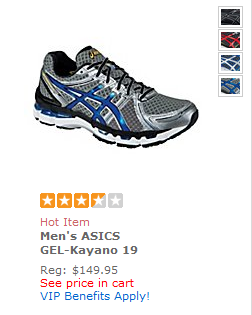
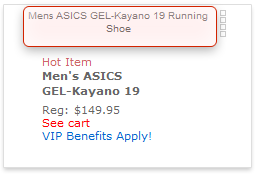
If you disable images in your browser and load a new web page, you′ ll be able to see the ALT texts of the images.
On the right, you see the ALT text "Mens ASICS GEL–Kayano 19 Running Shoe" instead of the image showing the shoe itself.
Here′ s the thing: if there weren′ t any text, Search Engines wouldn′ t notice the image. They only see the ALT text saying "ASICS Running Shoe".
As Search Engines pay attention to ALT texts, they can be used for SEO. For instance, quite a lot of businesses get very good traffic from Image Search. And, if there were no ALT texts, image search just wouldn′ t work.
So, to get some more traffic, you should use keywords in your ALT texts.
And, one more thing to remember. People can also see these texts. Some of your visitors may use special browsers for people with visual, hearing, or other impairments. Others will view your site without downloading any images. The ALT text will tell everyone what′ s on the image, no matter how people view your site.
So make these texts meaningful and to the point and... never write "My asshole Boss" in the ALT tag of your CEO′ s picture ;)
DO IT NOW! Write good ALT texts for your images. Where possible, use your keywords in them. Make all changes available online.
Make your pages link to each other
Remember I told you, pages on your site must link one to another? That was, for the robot to have many ways to go. These links coming from pages of the same site are called internal links, and they can also help your SEO efforts as the robots also looks at the links′ texts. Time to say,
Links to your page must contain your keywords!
Check the links to your landing page, the one you′ re making right at the moment. Now, add keywords to the links′ texts. Just to let you know... This text you see on the link and click on is called anchor text.
And the HTML code to produce this link looks like this:
<a href="http://www.some–website.com">this is what we call "anchor text"</a>
The anchor should contain keywords specific for the page to which the link leads (not for the one where the link′ s put). If you link from a page about dogs to a page about cats, the anchor text should say "cats".
Now make good keyword–rich and logical anchor texts.
For instance, if your page′ s about vacation at the Caribbean and one of your keywords is tours to the Caribbean and the link to this page looked like this:
To learn more about tours to the Caribbean, click here,
then you′ d better replace it with
Learn more about tours to the Caribbean.
And, if you don′ t have links to this page yet, put links immediately, and use keywords. Your links must tell what they really link to.
But, again, never forget that people are going to read these texts. Sometimes webmasters use words just because they are good keywords — and never care what users will think.
For instance, when I was looking to buy a turtle for my son, I clicked a link with an anchor "exotic pets" on some website. But all I found was all kinds of cats. Imagine my disappointment. In this case, the webmaster could write all cat breeds or cats for sale, or cats and kittens. Then, if users clicked the link, they′ d find what they expect.
Yes, you can "cheat" Search Engines, but it′ s important not to cheat real users.
DO IT NOW! Make internal links with descriptive keyword–rich anchor texts.
Done with links? Here′ s a reminder for you: if you made a new page to optimize, the page is not yet in the sitemap, so don′ t forget to add it! (You don′ t have to submit the sitemap to Search Engines again; the robot will see the changes next time it comes.)
DO IT NOW! Add your new page to the Sitemap.
Now, publish your page to the web server, and the first cycle of on–page optimization is over.
DO IT NOW! Make your page available online.



Answer
Answer
Answer
Answer
Answer
Answer
Answer
Answer
Answer
Answer